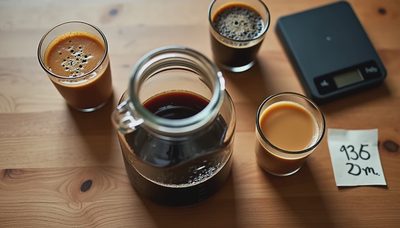

Jamie and I have never wanted the same coffee. That fact used to turn every weekday morning into a small negotiation. I wanted something strong, black, and uncomplicated. Jamie wanted something iced, creamy, and lightly sweet. We had one kitchen, limited counter space, and roughly ten minutes before one of us needed to walk out the door. For a long time the result was compromise drinks that satisfied neither of us, or two separate brewing methods that left the sink full and the clock already against us.
The fix turned out to be simpler than I expected. One cold-brew concentrate made on Sunday night. Two completely different drinks poured from the same jar on Monday morning. No extra equipment. No doubled cleanup. No one settling for the other person’s preference.
I tried it. I priced it. Here’s the shortcut.
How the System Actually Works in Our Kitchen
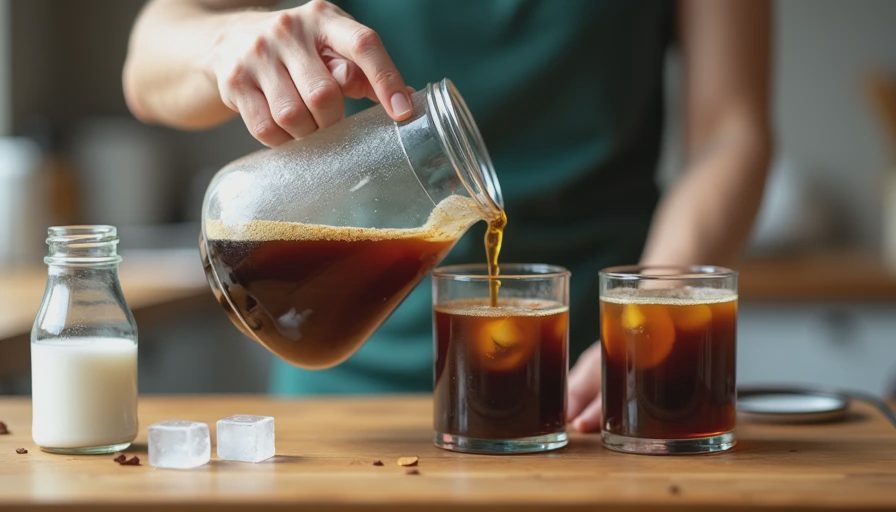
Every Sunday evening I make a batch of cold-brew concentrate. The method is the same one I described in the first post: coarse ground coffee, room-temperature water, twelve to fourteen hours of steeping, then strain into a clean jar. The concentrate sits in the fridge and becomes the shared base for the entire work week.
On weekday mornings the process splits in two directions that take almost no extra time.
Jamie’s order
3 ounces cold-brew concentrate
6 ounces oat milk
1 teaspoon vanilla syrup
Ice
Sometimes a quick froth if the cheap handheld frother is already on the counter.
My order
4 ounces cold-brew concentrate
Ice
Optional splash of half-and-half if I want it softer that day
In winter I often dilute the same concentrate with hot water instead of ice for a strong, clean hot cup.
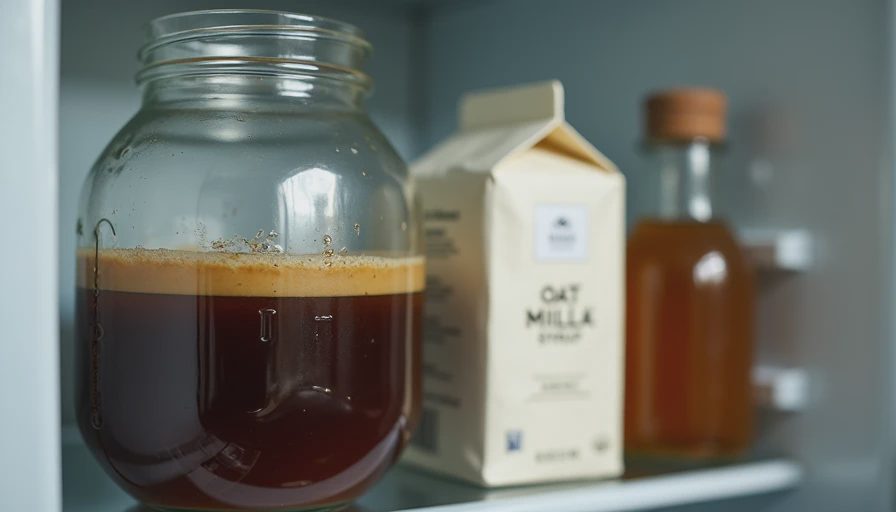
Both drinks come from the same jar. Both are finished in under five minutes total. The only extra items are the oat milk carton and the syrup bottle, which live in the fridge door so neither of us has to dig.
Why a Shared Base Beats Two Separate Methods
Before the concentrate system we tried the obvious alternatives. Two French presses. One person making espresso-style coffee while the other waited. Brewing a full pot and then doctoring individual cups with milk and syrup. Every version created more dishes, more decisions, and more morning friction.
The cold-brew concentrate removed the friction. The hard work happens once, on a night when no one is rushing. The weekday work is just pouring and adjusting. I get the strength and simplicity I want. Jamie gets the creamy, lightly sweet iced drink that actually tastes like something ordered on purpose. Neither of us has to pretend we like the other person’s coffee.
That last part matters more than it sounds. When you live with someone whose coffee preference is genuinely different from yours, repeated compromise starts to feel like a small daily loss. A system that lets both preferences exist without extra labor is worth protecting.
The Practical Details That Keep It Alive
Strength control
The concentrate is deliberately strong. That gives both of us room to dilute differently. Jamie’s version uses more milk and ends up milder. Mine stays bold. If the batch ever comes out weaker than usual, I simply use a larger pour for myself and keep Jamie’s ratios the same.
Sweetness and milk
We keep one bottle of basic grocery-store vanilla syrup and one carton of oat milk. Jamie uses both. I usually use neither. The ingredients stay accessible without taking over the fridge.
Timing
I start the two drinks at the same time. Concentrate into both glasses, ice into both, then milk and syrup into Jamie’s while I decide whether I want the splash of half-and-half. By the time the milk is stirred, both drinks are ready. We have timed it repeatedly. Total elapsed time is almost identical to making one drink.
Cleanup
One jar already in the fridge. Two glasses. One or two spoons. The frother wand if it was used. That is the entire footprint. No grounds in the sink. No second brewer to wash. No sticky syrup trails across the counter if we are reasonably careful.
What Happened When We Tried to Get Fancier
I once decided we needed two different concentrates—one darker and one lighter—so each of us could have a “perfect” base. It lasted exactly one week. Two jars took up too much fridge space, the extra brewing time on Sunday felt like a chore, and the difference in the final cups was smaller than the inconvenience. We went back to one jar.
I also tested making Jamie’s drink with leftover hot coffee cooled overnight. It worked in a pinch but never tasted as clean and went flat faster. The concentrate simply performs better for both temperature styles.
The lesson was consistent with everything else on this site: the version that survives is the one that stays easy under real weekday pressure. Fancy divisions of labor do not survive. Shared simplicity does.
Cost Reality for Two People
Using the same numbers from the cost-per-cup testing, Jamie’s iced latte lands around $0.87. My black iced version sits closer to $0.35–$0.40 depending on whether I add the splash of half-and-half. Together the two drinks cost less than $1.30. The café versions of the same two orders would easily clear $9 before tax.
We still buy café coffee when we are already out or when we want the exact espresso edge. Those purchases are now occasional instead of habitual. The Sunday batch covers the bulk of the workweek without drama.
How the System Handles Real-Life Interruptions
Some mornings one of us is running late and the other is not. The concentrate still works. The person who has time can pour both drinks in about three minutes and leave the second one on the counter. Some mornings we both want hot coffee. The same concentrate dilutes cleanly with hot water. Some mornings Jamie wants less sweetness or I want a little cream. The base does not care. It simply flexes.
The only real failure mode is forgetting to make the Sunday batch. When that happens we fall back to whatever is easiest—usually a quick pour-over or the backup bag of pre-ground coffee we keep for emergencies. The system is robust, not fragile. It improves the default without punishing the exceptions.
Why This Category Exists
“Two Orders, One Kitchen” is for households that contain more than one coffee preference and limited time, space, or patience. It is not about teaching couples to compromise harder. It is about building a small shared foundation that lets different preferences exist without multiplying the work.
One cold-brew batch does that job for us. It is not the only possible solution. It is the one that has lasted longest in our particular kitchen with our particular constraints.
Practical Starting Advice If Your Household Has Two Different Orders
Make the concentrate stronger than you think you need. Strength is easier to dilute than weakness is to fix. Keep the add-ins simple and visible so neither person has to hunt. Accept that the two final drinks will not be identical to café versions. Aim for “good enough that both people stop looking for alternatives.”
Track the time for one full week. If the shared system does not save time or reduce friction, change it. The goal is not purity. The goal is two people getting the coffee they actually want without turning the morning into a project.
Write down what works. Sticky notes on the fridge still function in this house. They are not elegant. They are honest.
You have one jar and two different preferences. Make the batch on Sunday. Pour two different drinks on Monday. Good enough is the point here—and this is more than good enough.