
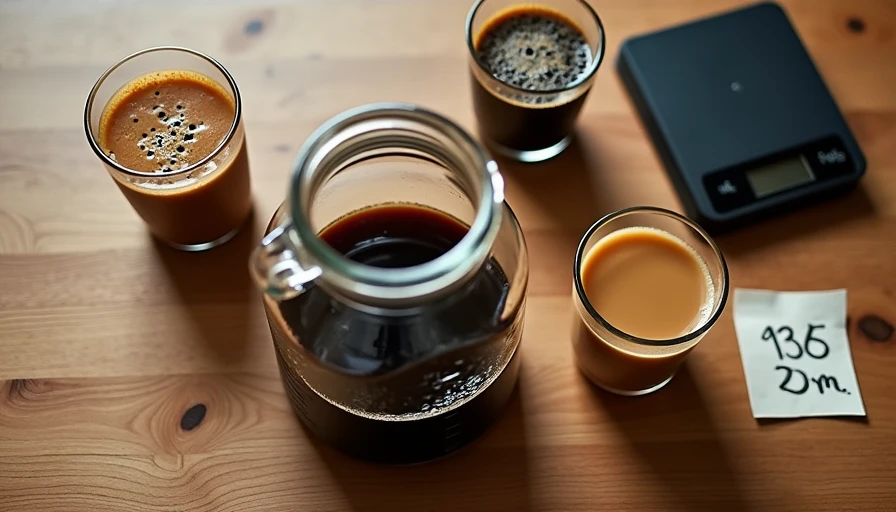
After twenty posts, dozens of sticky notes, and more than a year of weekday mornings in the same small Milwaukee kitchen, the system that actually runs our coffee life is simpler than it looks from the outside. One strong cold-brew concentrate made on Sunday. Two different drinks poured from the same jar on weekdays. A short list of ingredients that earn permanent fridge space. Everything else has been tested, used, and either kept or quietly removed.
This is the practical summary of what survived.
I tried it. I priced it. Here’s the shortcut.
What We Keep
The Sunday cold-brew concentrate
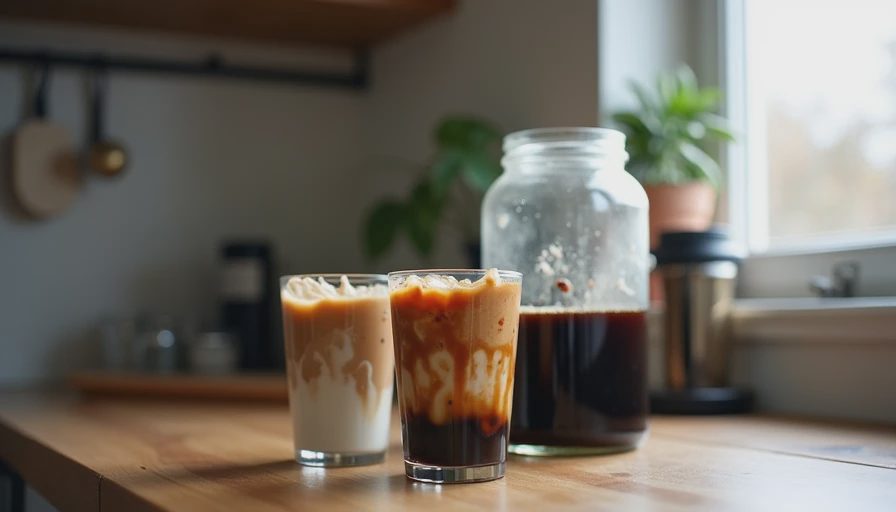
1:4 ratio by volume, coarse grind, 12–14 hour steep, strained into a clean jar, labeled with the date. It is the single highest-leverage habit in the kitchen. One batch covers five workdays and supports both black iced coffee and lightly sweet oat-milk lattes without extra brewing. Peak flavor lasts five to seven days. We treat day ten as the outer limit.
One primary milk
Plain unsweetened oat milk lives in the fridge door. It works for Jamie’s iced and hot lattes and does not fight the coffee. A small carton of half-and-half stays on hand for the occasional splash in my own cup. Two milk options are enough. More than that creates decision friction and fridge clutter.
One primary syrup
The basic store-brand vanilla syrup won the taste-and-cost test and stays. It is cheap per teaspoon, clean in flavor, and already familiar. Chocolate syrup and the occasional seasonal addition appear when needed, but vanilla is the default that never has to be hunted for.
The jar-and-strainer method
No dedicated cold-brew maker. A glass jar and a fine-mesh strainer lined with a paper towel or cheesecloth produce concentrate that tastes the same as the specialized equipment in the drinks we actually consume. The jar fits the fridge. The cleanup stays minimal.
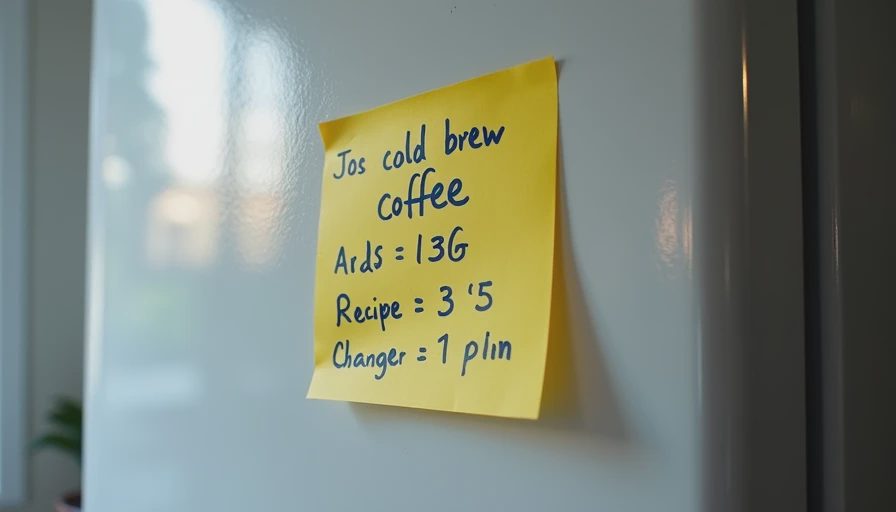
Sticky notes on the fridge
Ratios, cost reminders, and short sequence lists. They are not pretty. They are the most reliable memory system we have found for a routine that has to work when both of us are half-awake.
What We Skip
Daily frothing
The $13 handheld frother had thirty days of honest testing. It produced nicer texture on slow mornings and added enough cleanup and time friction that it lost daily status. It still exists for weekends. It is no longer part of the weekday sequence.
Multiple concentrates or multiple brewing methods
Two different strengths or two separate brewers solved a preference problem that no longer exists once the single strong concentrate is in place. Extra vessels and extra dishes returned the morning friction we had already removed.
Specialty sauces and premium syrups for everyday use
They taste interesting in isolation. Under weekday conditions the difference rarely justifies the cost or the extra bottle in the fridge door. Grocery-store versions, used with restraint, win on repeatability.
Gadgets that require permanent counter space
Anything that cannot live in a drawer or on a normal fridge shelf has to clear a higher bar than “nice to have.” Most do not clear it.
Perfection as the standard
We do not chase café-identical results. We chase drinks both of us will finish on a normal Tuesday without resentment or extra labor. That standard is stricter and more useful.
What We Repeat Without Thinking
The Sunday batch
It happens most weeks while other low-pressure tasks are already underway. The active work takes about ten minutes. The payoff lasts five days. Skipping it is the exception; making it is the default.
The shared-base weekday sequence
Fridge opened once. Concentrate poured into both vessels. Ice or hot milk added according to preference. Syrup measured or skipped. Everything returned to the fridge in one trip. Spoons in the sink. The sequence stays under ten minutes even when one of us is running late.
Cost awareness without obsession
We know the iced latte lands around $0.85–$0.90 and the black iced coffee around $0.35–$0.40. We know three replaced café drinks per week already produce clear monthly savings. We do not recalculate every morning. The knowledge simply keeps the home version as the automatic choice.
Seasonal flexibility on the same foundation
Apple-cinnamon coffee, peach sparkling versions, ginger-citrus mocktails, pumpkin spice with less sugar—all of them borrow the cold-brew concentrate or the same low-effort logic. The core system does not change when the weather does. Only the add-ins change.
Two preferences, one kitchen footprint
Jamie’s drink and my drink are allowed to be different in temperature, sweetness, and milk. They are not allowed to double the dishes, the time, or the counter space. The shared concentrate is what makes that rule enforceable.
The Numbers That Still Matter
Weekly home coffee ingredient cost for both of us: roughly $7–$9.
Café cost for the same number of comparable drinks: easily $25–$35.
Time for two different weekday drinks once the concentrate exists: six to eight minutes.
Equipment that has permanent status: one jar, ordinary glasses and mugs, a basic strainer.
Everything else has to re-earn its place.
What the System Is For
It is not a hobby. It is not a performance of coffee knowledge. It is a small piece of infrastructure that protects the first part of the workday. Two people get the coffee they actually want. The kitchen stays usable. The cost stays low. The decisions stay few.
When the system works, the morning feels less like a negotiation and more like a routine that simply runs. That is the outcome we keep.
Practical Advice If You Want a Version of the Same Thing
Start with one strong cold-brew concentrate and the drinks you already know you like. Make the batch on a low-pressure evening. Use it for a full work week before you change anything. Notice which extra steps you still take when you are late. Remove those first. Keep only the ingredients that get used without discussion. Write the surviving ratios on a sticky note and put it where you will see it while the coffee is being poured.
Adjust for your own preferences and your own kitchen size. The exact ratios in this house are not magic. The willingness to test, measure, and discard what does not serve the weekday is the part that transfers.
You have two different coffee orders and one ordinary kitchen. Build the smallest system that lets both orders exist without taking over the room. Good enough is the point here—and the system that is still running after more than a year is more than good enough.