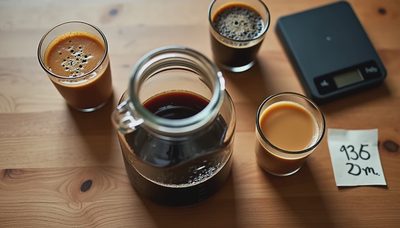
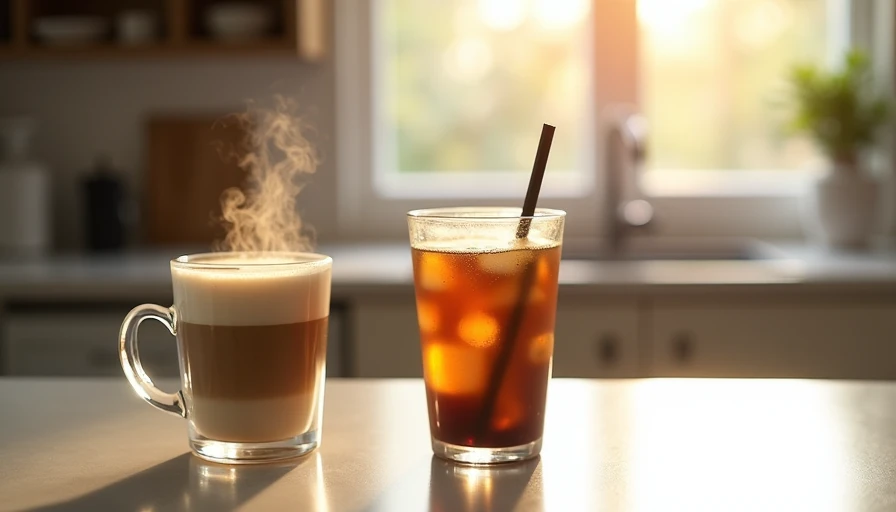
Some mornings the temperature difference inside our kitchen is bigger than the temperature difference outside. Jamie wants a hot latte. I want iced coffee. Same coffee base, opposite temperatures, and roughly eight minutes before one of us needs to leave. For a long time this combination felt like a logistics problem. Two brewing methods, two sets of dishes, and the quiet friction of someone always waiting.
The cold-brew concentrate changed the math. One jar in the fridge supports both a hot drink and a cold drink without doubling the work. I heat milk for Jamie’s latte while I pour concentrate over ice for myself. Total extra time is almost zero. Cleanup stays minimal. Both of us get the temperature we actually want.
I tried it. I priced it. Here’s the shortcut.
How the Two-Temperature System Works
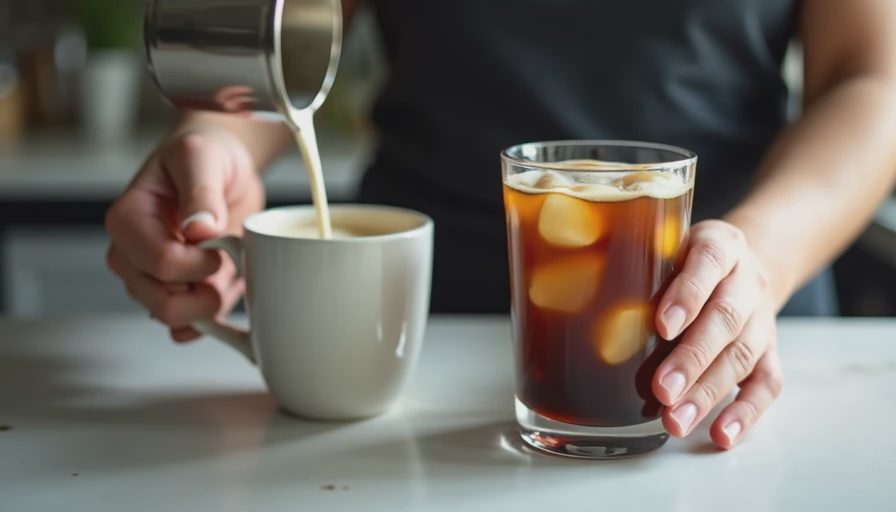
The foundation is the same Sunday cold-brew concentrate I make every week. Because it is strong and already extracted, it can be diluted with hot water or hot milk just as easily as it can be poured over ice. That flexibility is the entire reason the system survives.
Jamie’s hot latte
3 ounces cold-brew concentrate
6 ounces oat milk, heated
1 teaspoon vanilla syrup
Optional: quick froth if the handheld frother is within reach
My iced coffee
4 ounces cold-brew concentrate
Ice
Optional splash of half-and-half
I start the oat milk heating first (microwave or small saucepan). While it warms, I fill my glass with ice and pour my concentrate. By the time the milk is hot, Jamie’s drink is only two steps away: concentrate into the mug, hot milk on top, syrup stirred in. Both drinks are ready in the same window.
Why Temperature Preference Used to Create Friction
Before the concentrate system we defaulted to one temperature and made the other person adjust. Either we both drank something hot or we both drank something iced. The person who compromised never said much, but the pattern was obvious. Small daily concessions add up. A system that removes the concession feels larger than the coffee itself.
Separate brewing methods solved the preference problem and created a new one: time and cleanup. Two French presses or a pour-over plus a separate iced method left the counter covered and the clock ticking. The shared concentrate eliminates that trade-off.
The Practical Sequence That Keeps Us on Time
Turn on the kettle or start the milk heating.
Fill one glass with ice and pour my concentrate.
Pour Jamie’s concentrate into a mug.
Add hot milk and syrup to the mug.
Optional froth.
Done.
The sequence is deliberately short. No step depends on perfect timing. If the milk heats faster than expected, Jamie’s drink simply sits for thirty seconds. If I am slower with the ice, the hot milk waits. The system absorbs small variations without collapsing.
Taste and Texture Reality
Jamie’s hot latte tastes like a smooth, lightly sweet café-style drink without the espresso edge. The cold-brew concentrate gives it a rounder body than most leftover hot coffee would. My iced version tastes like the black iced coffee I actually want—clean, strong, no extra sweetness. The same jar produces both without either drink feeling like a compromise.
In colder weather I sometimes switch my own drink to hot water plus concentrate for an Americano-style cup. The method stays identical. Only the diluting liquid changes.
The Failures That Refined the Process
Early on I tried heating the concentrate itself for Jamie’s drink. It worked, but the flavor flattened slightly and I lost the ability to keep my own portion cold. Heating only the milk (or using hot water) preserves the concentrate’s character for both temperatures.
I also experimented with making a full hot brew for Jamie and using concentrate only for myself. That returned us to two methods and two sets of dishes. The shared base is simply more efficient.
One week I used dairy milk for the hot latte and oat milk for other drinks. Managing two milk cartons added friction. We standardized on oat milk for the hot latte and kept a small carton of half-and-half for my occasional splash. Fewer variables, fewer decisions.
Time, Cleanup, and Cost for Two Temperatures
Active time for both drinks: five to seven minutes.
Cleanup: one mug, one glass, one spoon, occasionally the frother wand or a small saucepan.
Special equipment: none beyond what we already own.
Cost remains low. Jamie’s hot latte sits around $0.85–$0.90. My iced coffee sits around $0.35–$0.40. Together they cost less than a single café drink of either style. The café versions of a hot latte plus an iced coffee would easily exceed $9 before tax.
How the System Handles Real Mornings
Some days Jamie is running late and I am not. I can make both drinks and leave the hot one on the counter under a small plate. Some days the opposite happens. The concentrate does not care who pours first. Some days we both want iced. Some days we both want hot. The same jar covers every combination without requiring a new plan.
The only real failure mode is an empty concentrate jar. When that happens we fall back to whatever is fastest—usually a quick hot brew or the emergency pre-ground coffee. The system improves the default. It does not punish the exceptions.
Why This Belongs in “Two Orders, One Kitchen”
The category exists for households where coffee preferences diverge in ways that used to multiply work. Temperature is one of the most common divergences. A shared concentrate that performs well both hot and iced removes the need to choose whose preference wins on any given morning.
This is not a lecture about compromise. It is a practical description of a system that lets both preferences exist at the same time without extra labor.
Practical Advice If Your Household Has the Same Split
Make the concentrate strong enough that it can handle both hot milk and ice without tasting weak. Keep the milk and syrup in easy reach so the hot drink does not require a scavenger hunt. Heat only the milk (or water), not the coffee itself. Accept that the hot latte will not taste identical to a café espresso version. Aim for “good enough that both people stop negotiating.”
Write the rough sequence on a sticky note if the mornings are still chaotic. Mine is short: heat milk, pour ice drink, pour hot drink, done. The note is not pretty. It is effective.
You have one jar and two temperature preferences. Make both drinks from the same base. Good enough is the point here—and this is more than good enough.