

I used to think Sunday nights were for folding laundry, staring at the week ahead, and maybe finishing the last of the weekend snacks. Then one particularly chaotic Monday morning changed everything. Jamie and I both needed coffee before work. I wanted something strong and black. Jamie wanted something iced, creamy, and just sweet enough. We had about twelve minutes, one French press that hadn’t been cleaned properly, and a fridge that contained approximately three different half-used milk cartons. The result was two mediocre drinks, a sticky counter, and the distinct feeling that we were already losing the day.
That was the morning I decided something had to change. Not a big, dramatic overhaul. Just a small, reliable system that would stop the weekday scramble. So I started making coffee on Sunday night.
The Real Reason It Stuck
It wasn’t about becoming a better coffee person. I’m still not interested in weighing beans to the gram or talking about origin stories over dinner. What I needed was a way to protect the first twenty minutes of every workday. Those minutes matter more than I used to admit. When the coffee is already halfway done, the rest of the morning feels less like a fight.
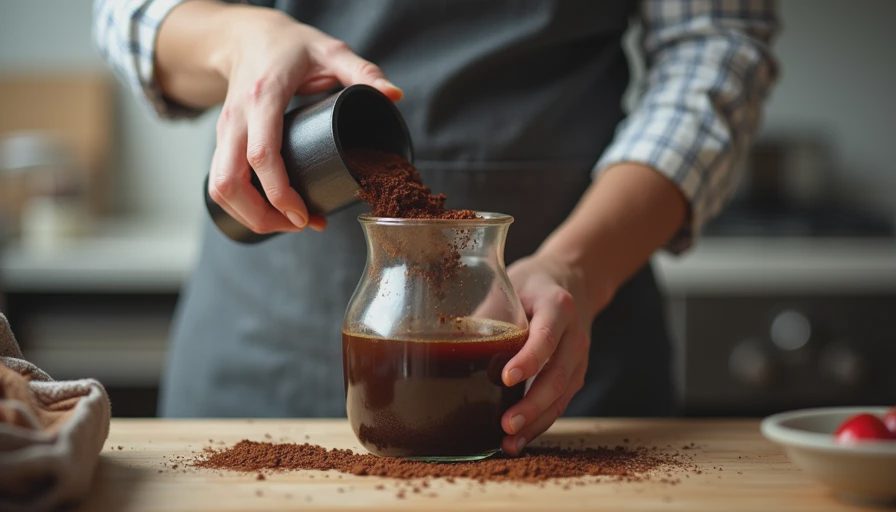
Sunday night became the quiet window where I could think about the week without rushing. I would grind a batch of beans, mix the concentrate, and put the jar in the fridge while Jamie finished the dishes. The whole process took less than fifteen minutes once I stopped overthinking it. By Monday morning, all I had to do was pour, dilute, and decide how much milk or syrup each of us wanted. Two different drinks, one shared base, almost no cleanup.
That first week felt like cheating. By the third week it felt normal. Now it’s just part of the Sunday routine, right between grocery check and setting out the next day’s clothes.
What “Sunday Cold Brew” Actually Looks Like in Our Kitchen
I keep it simple on purpose. No special equipment beyond a large jar, a fine-mesh strainer or cheesecloth, and the coffee we already buy. I use a coarse grind because that’s what works with the beans we keep on hand. The ratio I settled on after a few messy experiments is roughly 1:4 by volume for the concentrate—coffee to water. It’s strong enough that both of us can dilute it differently without ending up with weak coffee.
I mix it Sunday evening, leave it on the counter for about twelve to fourteen hours (or in the fridge if the apartment is warm), then strain it into a clean jar. The concentrate usually lasts us five full workdays with a little left over for Saturday morning if we’re lucky. Jamie likes it with oat milk and a small pour of the grocery-store vanilla syrup we buy in bulk. I drink mine black over ice or, when the Milwaukee weather turns cold, diluted with hot water and a splash of half-and-half.
The key was accepting that the concentrate doesn’t have to be perfect. Some batches taste a little brighter. Some are smoother. All of them are better than the rushed French-press situation we used to live with.
The Monday Morning Difference
Here’s what actually changed. I no longer stand in the kitchen calculating how long the brew will take while the clock is already moving. I don’t have to decide between making two separate drinks or forcing us both into the same one. And I don’t end up with a sink full of grounds and sticky spoons before 7:30 a.m.
Instead, I open the fridge, grab the jar, and make two drinks in the time it takes Jamie to find a matching pair of socks. One glass gets ice, oat milk, and a measured amount of syrup. The other gets ice and nothing else. We both leave the house with something that tastes intentional instead of desperate.
I tried it. I priced it. Here’s the shortcut: the Sunday night batch costs less than three café drinks and removes the weekday decision fatigue. That trade feels obvious once you live with it for a month.
The Failures That Taught Me More Than the Successes
The first batch I made was too strong. I used a finer grind because I thought it would extract better. It extracted so well that the concentrate tasted bitter even after heavy dilution. Jamie politely finished the sweet version and then suggested we “maybe try something else next week.” I wrote the ratio on a sticky note and stuck it to the fridge. Lesson learned.
The second batch sat too long. I left it for almost twenty hours because I got distracted by a movie. It was still drinkable, but the flavor had flattened. Now I set a phone reminder. Small systems beat willpower every time.
I also tried making the concentrate in a French press for a while, thinking the plunger would make straining easier. It did, until the mesh clogged and I spent ten minutes cleaning coffee sludge out of the mechanism. Back to the jar and a simple strainer. Cleanup dropped from annoying to almost nonexistent.
These weren’t dramatic disasters. They were ordinary kitchen experiments that taught me what “good enough for a workday” actually looks like in our apartment. That’s the standard I care about.
Why This Works for Two Different Drink Orders
Jamie and I have never wanted the same coffee. That used to create friction every morning. Now the cold-brew concentrate is the shared foundation. From there we branch off.
Jamie’s version is closer to an iced latte: concentrate, oat milk, a little syrup, ice. Mine is closer to black iced coffee or, in winter, a hot Americano-style drink made with hot water. The same jar supports both without requiring two separate brewing methods or extra equipment.
We keep a small bottle of the vanilla syrup in the fridge door and a carton of oat milk that gets used for both coffee and the occasional bowl of cereal. Everything else stays in the pantry. The system is deliberately boring. Boring is what survives a busy week.
The Cost Side of the Habit
I track the numbers because I like knowing whether the effort is actually saving us money. A bag of decent whole-bean coffee runs us about sixteen dollars and lasts for three full batches of concentrate. Each batch makes roughly ten to twelve servings depending on how strong we dilute. Factor in the oat milk and the occasional syrup, and the homemade version lands somewhere around eighty to ninety cents per drink.
The café version of the same drinks would cost four to six dollars each, easy. Even if we only replace three café stops a week, the Sunday batch pays for itself quickly. More importantly, it removes the decision of whether we “deserve” a café stop on a random Tuesday. That mental math used to drain more energy than the money itself.
What I Keep on the Counter and What I Don’t
I keep the large jar, the strainer, and a small notebook where I write the date of each batch and any notes about the beans. That’s it. No dedicated cold-brew maker, no fancy scale, no extra gadgets that would need storage space we don’t have.
The things I tried and removed: a reusable filter that was a pain to clean, a second pitcher that just took up fridge real estate, and a set of glass bottles that looked nice but weren’t any better than the plain jar. Every item that stays has to earn its place by making the weekday mornings easier, not by looking impressive.
How the Habit Expanded Beyond Coffee
Once the Sunday cold-brew routine felt solid, I started using the same quiet window for other small preparations. Sometimes I make a simple syrup. Sometimes I portion out the week’s coffee beans so I’m not grinding under pressure. None of it is elaborate. The point is to move the work to a time when I’m not already late.
Jamie noticed the difference first. “You’re less tense on Mondays,” was the exact phrase. That’s when I realized the system wasn’t just about coffee. It was about protecting the start of the day so the rest of it had a better chance.
A Practical Starting Point If You Want to Try It

You don’t need my exact ratio or my exact jar. Start with whatever coffee you already buy and a container large enough to hold a few days’ worth. Coarse grind, room-temperature water, twelve to sixteen hours of steeping, then strain. Taste it Monday morning and adjust the next week. Write down what worked and what didn’t. The sticky-note method still works for me.
If your household has two different coffee preferences, make the concentrate strong enough that both versions can be diluted differently. Keep the add-ins simple and accessible. And give yourself permission for the first couple of batches to be imperfect. They will be. That’s how you find the version that actually fits your kitchen and your mornings.
I still make coffee on Sunday night. Not because it’s trendy or because I suddenly became a cold-brew evangelist. I do it because the alternative—scrambled weekday mornings and two half-hearted drinks—stopped being acceptable. The concentrate in the fridge is a small, quiet promise that Monday doesn’t have to start with chaos.
You have ten minutes on Sunday. Make this one. Good enough is the point here—and this is more than good enough.