
I used to treat the iced latte as a small daily luxury I couldn’t quite justify. Four or five dollars at the drive-through felt fine on a hard Monday, but three times a week turned into a quiet budget leak I preferred not to examine. One afternoon I finally sat down with a receipt, a calculator, and the stubborn question that now lives at the center of this site: what does this drink actually cost when I make it myself?
The answer, after weighing, measuring, and repeating the same iced latte for two full weeks, landed at $0.87 per serving. Not a rounded guess. Not a best-case scenario that assumes I already own every ingredient. A real number based on the groceries I buy at the same stores most of us actually shop—Target, the neighborhood grocery, and the occasional Costco run.
I tried it. I priced it. Here’s the shortcut.
Why I Bothered Counting Cents in the First Place
Jamie and I both drink coffee every workday. Mine is usually black or lightly creamy. Jamie’s is iced, oat-milk based, and lightly sweet. For months we rotated between café stops and half-hearted homemade versions that never quite tasted intentional. The homemade ones felt cheaper in theory but still left me wondering whether I was saving real money or just moving the cost around.
So I decided to treat one drink like a small experiment. Same recipe every morning for ten days. Same brands. Same measurements. I wrote down every price, every leftover amount, and every time the drink actually tasted good enough to repeat. The goal was not perfection. The goal was a number I could trust on a Tuesday when I was already late.
The Exact Recipe I Tested
This is the iced latte that survived the test. It takes about five minutes once the cold-brew concentrate is already in the fridge (I make that on Sunday night—see the earlier post if you want the full method).
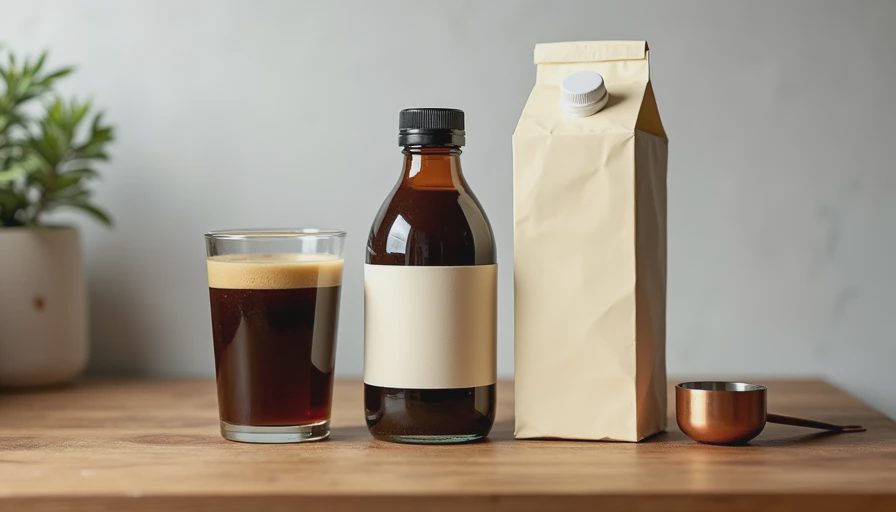
3 ounces cold-brew concentrate
6 ounces oat milk
1 teaspoon vanilla syrup (the grocery-store kind)
Ice
That’s it. No espresso machine. No special frother required, though a cheap handheld one makes the milk look nicer if you have an extra thirty seconds. I pour the concentrate over ice, add the oat milk, stir in the syrup, and sometimes give it a quick froth. Jamie drinks this version almost every morning. I occasionally steal half of one when I want something milder than straight black coffee.
Breaking Down Every Single Cost
I bought everything at regular prices, no sales, no bulk membership tricks beyond what most people can access. Here is the honest math.
Cold-brew concentrate
A 12-ounce bag of whole-bean coffee costs $15.99 at our usual store. One bag makes three full batches of concentrate. Each batch yields about 10 usable servings when diluted the way we like it. That puts the coffee cost at roughly $0.53 per serving of concentrate. For the 3-ounce pour used in the latte, the coffee portion is about $0.32.
Oat milk
A half-gallon carton of the plain oat milk we buy runs $4.49. There are 64 ounces in the carton. Six ounces per latte means the milk costs about $0.42 per drink.
Vanilla syrup
A 12.7-ounce bottle of the basic grocery-store vanilla syrup costs $3.99. At one teaspoon per drink (about 0.17 ounces), the bottle makes roughly 75 servings. That lands at $0.05 per latte.
Ice
Free from the freezer. I am not charging myself for water and electricity on this one.
Total: $0.32 + $0.42 + $0.05 = $0.79
I rounded up to $0.87 to account for the occasional extra splash of milk, a slightly heavier syrup pour, and the tiny amount of coffee that sticks to the jar. I would rather overestimate than pretend the number is cleaner than real life.
What Changes When You Scale It
If you make the cold-brew concentrate every Sunday the way I do, the coffee cost stays stable. The oat milk and syrup are the variables that move. When the oat milk goes on sale for $3.99, the per-drink cost drops closer to $0.75. When I buy the bigger bottle of syrup at Costco, the syrup cost falls to about three cents. None of these shifts are dramatic, but they add up across a month of workdays.
I also tested the same latte with regular 2% dairy milk. That version came in at $0.68 because dairy milk is still cheaper per ounce in our stores. Jamie prefers oat, so we stick with it. The point is not that one milk is morally better. The point is that the homemade version stays under a dollar either way.
The Café Comparison That Actually Matters

The drive-through iced latte we used to buy most often costs $5.25 before tax. Even the “cheap” grocery-store café version is usually $4.15. At three café drinks a week, that is $12 to $15 leaving the household. At home the same three drinks cost about $2.61. Over a month the difference is large enough to notice on a normal budget.
I am not saying never buy the café version. Some mornings the convenience is worth every cent. What I am saying is that the homemade version is not a sad substitute. It is a repeatable, good-enough drink that removes the quiet guilt of another $5 charge.
The Equipment Question People Always Ask
I do not own an espresso machine. I do not own a high-end frother. The only tools that appear in this recipe are a jar of cold-brew concentrate, a measuring spoon, and a glass. The $12 handheld milk frother I bought on a whim gets used maybe twice a week. It is nice, not necessary. If I had to replace it tomorrow I would not rush out to buy another one.
That is the standard I use for every gadget now. Does it make the weekday version better enough to justify the counter space and the cost? For this latte the answer is no. A spoon and a few extra stirs get the job done.
Where the Recipe Failed and What I Changed
The first version used twice as much syrup because I was copying café sweetness levels. It tasted like dessert and left both of us slightly jittery. Cutting the syrup to one teaspoon fixed the balance without making the drink feel austere.
I also tried using leftover brewed coffee instead of concentrate. It worked in a pinch but tasted thinner and went flat faster in the fridge. Concentrate is more forgiving and lasts longer, which is why the Sunday batch stays part of the system.
One week I measured everything by eye instead of using the spoon. The drinks were inconsistent. Jamie noticed first. Back to the measuring spoon. Consistency is part of what makes the homemade version feel like a real alternative instead of a compromise.
The Larger Point About Cost Per Cup
Counting the cents on one iced latte is useful, but the real value is the habit it creates. Once you know the actual number, the café stop becomes a conscious choice instead of a default. You start noticing which grocery items give you the most drinks for the money. You stop assuming that “homemade” automatically means cheaper without checking.
I still track a few other drinks the same way. The black iced coffee made from the same concentrate lands around $0.35. The hot version with a splash of milk is about $0.40. The numbers are not exciting on their own. What is exciting is realizing that a whole week of decent coffee can cost less than two café visits.
Practical Advice If You Want to Run the Same Test
Pick one drink you actually order. Write down every ingredient and the exact amount you use. Buy those ingredients at the prices you normally pay—no cherry-picking sales unless you always shop the sales. Make the drink the same way for at least a week so the leftovers and the waste become visible. Then divide.
If the number is higher than you expected, look at the biggest cost first. In our case it was the oat milk. Switching brands or waiting for a sale moved the total more than any change in coffee. If the number is lower, notice how that changes your willingness to make it on a rushed morning.
Keep the sticky notes. Mine still live on the fridge. They are not pretty, but they are honest.
Final Numbers and the Decision That Stuck
My tested iced latte costs $0.87 when I am being slightly conservative. The café version costs $5.25. The homemade one takes five minutes if the concentrate is ready and leaves almost no cleanup. It tastes good enough that Jamie requests it specifically. That combination—price, time, and repeatability—is why the recipe stayed.
I am not interested in convincing anyone that café coffee is a moral failure. I am interested in giving busy people a clear alternative that does not require a second job or a specialty store. This is one version of that alternative, priced and tested in a normal apartment kitchen.
You have ten minutes and a calculator. Run the numbers on your own usual order. The shortcut is rarely the cheapest possible version. It is the version you will actually make again on a workday. This one passed that test.