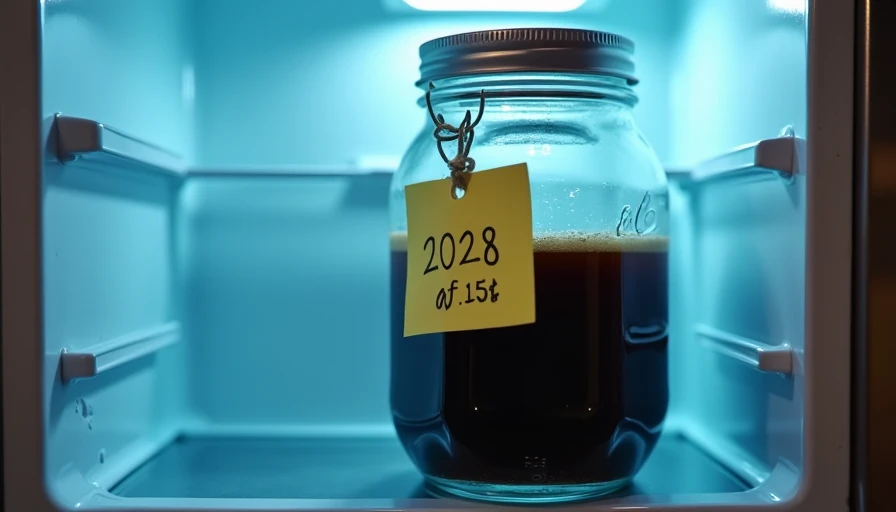
I used to treat cold-brew concentrate like it had a mysterious expiration date that only coffee people understood. Some sources said three days. Some said two weeks. A few optimistic corners of the internet claimed a month. None of them had lived with the same jar in the same fridge through a normal work week in a normal apartment. So I started writing the date on every batch and tasting it deliberately until it stopped being something I wanted to drink.
After more than a year of Sunday batches, the practical answer in our kitchen is clear: five to seven days for peak flavor, up to ten days if you are willing to accept a quieter cup. Beyond that the concentrate is still safe in the ordinary food-safety sense, but it is no longer the drink I make on purpose.
I tried it. I priced it. Here’s the shortcut.
The Real Timeline from Our Fridge
Days 1–3
Brightest, cleanest, most flexible. This is the window where the concentrate performs best for both Jamie’s sweet iced latte and my black iced coffee. The flavor is rounded but still has some lift.
Days 4–5
Still excellent. Most of our workweek lives here. Any slight softening of the brighter notes is hard to notice once milk or ice is involved. I make no adjustments.
Days 6–7
Still good. The coffee tastes a little flatter, a little more one-note. For black coffee I sometimes use a slightly larger pour. For Jamie’s latte the difference is minor. We finish the jar without complaint.
Days 8–10
Drinkable but clearly past its best. The flavor has lost most of its lift and can start to taste slightly woody or dull. I will use it if the alternative is skipping coffee, but I no longer prefer it. This is the point where I start planning the next Sunday batch more seriously.
Beyond 10 days
I pour it out. Not because it has become dangerous, but because it has stopped meeting the “good enough to make again on a workday” standard. The jar gets washed and the cycle restarts.
How I Tested It Without Fancy Equipment
I did not send samples to a lab. I wrote the brew date on a piece of tape on every jar and tasted the concentrate black over ice at the same time each morning. I also made Jamie’s usual iced latte with the older concentrate and asked whether anything tasted off. The notes were consistent across multiple batches and multiple bags of beans.
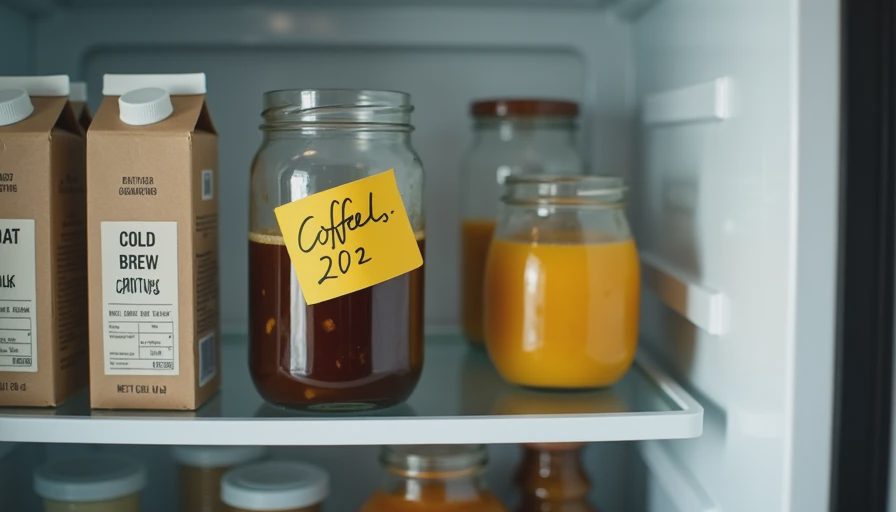
I kept the jar on the middle shelf of the fridge, not in the door, and always used a clean spoon or poured directly so that nothing from other foods dripped in. Those two habits matter more than most of the complicated advice I have seen.
What Actually Makes Concentrate Last Longer or Shorter
Grind size
Coarse grind produces a cleaner concentrate that holds its flavor better. Fine grind extracts more bitter compounds and silt that accelerate the decline.
Steep time
My standard 12–14 hour steep is the sweet spot for our ratio. Longer steeps (18–20 hours) produced concentrate that tasted tired earlier in the week.
Storage vessel
A clean glass jar with a tight lid outperforms plastic in our experience. I also avoid jars that previously held anything with a strong smell.
Fridge temperature and placement
Middle shelf stays more consistent than the door. Every time I got careless and left the jar in the door, the concentrate faded a day sooner.
Beans
Fresher beans give a brighter starting point and seem to hold quality a little longer. Very dark roasts start flatter and decline into dullness faster. I do not chase perfect beans; I just notice the pattern.
The Safety Question People Always Ask
Cold-brew concentrate is still a low-acid coffee product stored in the fridge. Ordinary food-safety practice applies. Use a clean jar. Keep it cold. Do not leave it on the counter for hours after brewing once it has been strained. If it ever smells sour, vinegary, or genuinely off, throw it out. In more than a year of weekly batches I have never had a jar turn truly bad inside the ten-day window. The limiting factor has always been flavor, not safety.
I am not a food scientist. I am a person who writes the date on the jar and pays attention. That level of care has been enough.
How the Timeline Affects the Sunday Habit
Knowing the real window removed a low-level anxiety. I no longer wonder whether Thursday’s coffee will still be good. I know it will. I also know that if we skip a day or use smaller pours, the jar may still be fine on Saturday morning. The five-to-seven-day peak matches a normal work week almost perfectly. That alignment is part of why the Sunday batch stays sustainable.
If we are traveling or know we will use less coffee, I simply make a smaller batch. The ratio stays the same. The timeline stays the same. The only variable is volume.
What Happens When I Push Past the Window
I have deliberately drunk concentrate on day 11 and day 12 to test the edge. It was still coffee. It was no longer the coffee I look forward to. The brighter notes were gone, the body felt thinner, and both Jamie and I reached for more milk or more syrup to compensate. That compensation is the signal that the batch has lasted long enough.
I used to try to “save” older concentrate by turning it into ice cubes or mixing it into something sweeter. The ice cubes were fine for iced drinks in a pinch. The sweeter mixes just tasted like I was trying to hide tired coffee. Now I simply start a new batch. The cost of the beans is low enough that clinging to a fading jar is not worth the drop in quality.
Practical Storage Habits That Actually Help
Write the brew date on the jar the moment it goes into the fridge.
Store it on a middle shelf, not the door.
Always use clean utensils or pour directly.
Keep the lid tight.
If you make a large batch, consider splitting it into two jars so one stays sealed longer.
None of these habits require special equipment. They only require the decision to treat the concentrate like food instead of like a mysterious coffee science project.
Why This Matters for the Larger System
The Sunday cold-brew habit only works if the concentrate remains something both of us want to drink through Friday. The real-world shelf life makes that possible without forcing me to brew twice a week or accept declining quality. Five to seven days of good flavor is enough. Ten days of acceptable flavor is a useful buffer. Beyond that, the honest move is to start again.
You do not need a laboratory timeline. You need a piece of tape, a marker, and the willingness to taste the concentrate on its own once or twice during the week. The coffee will tell you when it is past its best.
You have a jar and a fridge. Write the date. Drink it while it still tastes like the reason you made it. Good enough is the point here—and five to seven days of good concentrate is more than good enough.