
I used to think of café coffee as a small, justifiable expense and home coffee as the thing I did when I was being responsible. That framing made the math fuzzy. One afternoon I sat down with a month of actual receipts, the cost tracking I already kept for our weekday drinks, and a simple question: at what point does the homemade version clearly win on money, and how many café visits does it take before the home system has paid for itself?
The numbers are not abstract. They come from the same iced lattes, black iced coffees, and occasional seasonal drinks Jamie and I actually consume, priced at the stores we actually use and the cafés we actually visit when we are out.
I tried it. I priced it. Here’s the shortcut.
The Real Weekly Baseline
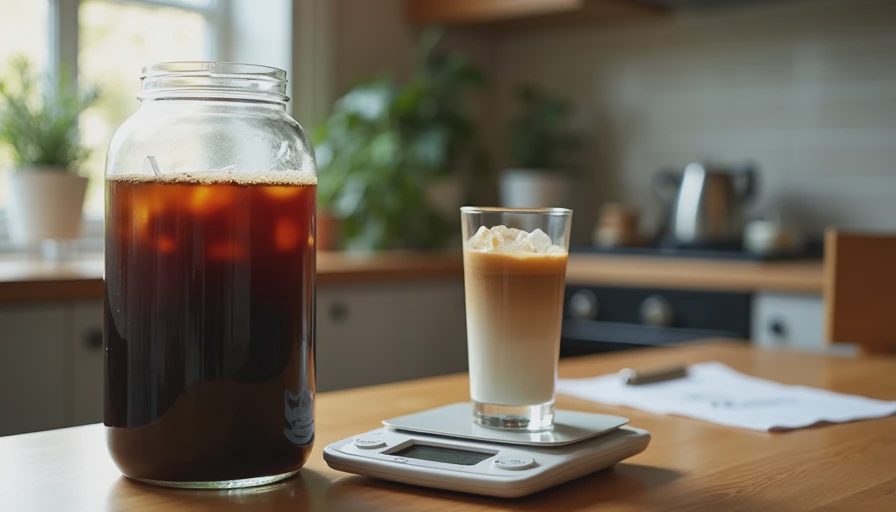
In a normal work week we make ten to twelve coffee drinks at home from the Sunday cold-brew concentrate. Most are variations on the $0.85–$0.90 iced latte or the $0.35–$0.40 black iced coffee. A realistic mixed week costs us about $7–$9 in ingredients for all the home coffee combined.
The café versions of the same drinks average $5.25 for a basic iced latte and $3.75–$4.25 for a plain iced coffee before tax. Two café visits each per week (four drinks total) already total $18–$22. Three visits each push the weekly café cost past $30.
Those are the numbers that matter. Everything else is commentary.
Where the Break-Even Actually Sits
If we replace just three café drinks per week with the home versions, the ingredient cost of those three homemade drinks is roughly $2.40–$2.70. The café cost for the same three drinks is roughly $14–$16. The weekly savings land around $12. Over a month that becomes $45–$50.
The home system has almost no startup cost beyond a jar and a strainer most people already own or can buy for under $10. Even if you count a $16 bag of coffee as the first investment, the break-even against café prices arrives inside the first week of consistent use.
The more precise break-even depends on how many café drinks you actually replace, not on how many you theoretically could replace. In our case, replacing three to four café drinks per week keeps the home system clearly ahead on pure money. Replacing more widens the gap. Replacing fewer still saves money; the advantage is simply smaller.
The Costs People Usually Forget
Café side
Tax
Tip (when applicable)
Fuel or time cost of the trip
The “while I’m here” extra pastry or second drink that was not in the original plan
Home side
The coffee itself
Milk or oat milk
Syrup or other add-ins
A small amount of electricity or gas for heating water or milk
The occasional replacement of a basic strainer or jar lid
When I added the forgotten café costs, the gap widened. When I added the forgotten home costs, the gap barely moved. The home system remained cheaper by a wide margin once the replacement rate hit three drinks a week.
Taste and Convenience Are Part of the Equation
Pure cost is not the only factor. If the homemade drink is noticeably worse or meaningfully slower, the money savings lose value. In our kitchen the cold-brew system produces drinks both of us continue to choose even when the café is convenient. The weekday process stays under ten minutes for two different drinks. Cleanup stays minimal. Those facts keep the replacement rate honest instead of aspirational.
I still buy café coffee. Some mornings the trip is already happening. Some days the exact espresso edge is what I want. Those purchases are now deliberate instead of automatic. The break-even math did not eliminate café coffee; it simply made the default cheaper and easier to sustain.
A Simple Way to Calculate Your Own Break-Even
Write down the café drinks you actually buy in a normal week and their real prices after tax.
Calculate the ingredient cost of the home versions of those same drinks using the prices you actually pay at the store.
Subtract the home cost from the café cost. That is your weekly savings if you replace them.
Divide any startup equipment cost by the weekly savings. That tells you how many weeks until the equipment is paid for.
In our case the equipment cost was essentially zero, so the payback was immediate. Even if you buy a better jar, a decent strainer, and a bag of coffee on day one, the payback period is still measured in days or a couple of weeks, not months.
What Changed After I Ran the Numbers
The biggest change was psychological. Café coffee stopped feeling like a small treat that did not count and started feeling like a known expense with a known alternative. I became more willing to make the home version on days when the only barrier was mild inconvenience. The monthly coffee spending dropped without either of us feeling deprived.
I also stopped buying gadgets that promised to “make home coffee as good as the café” unless they could survive a real cost-and-friction test. Most of them failed. The basic system continued to pass.
Limitations of the Math
This break-even assumes you already drink coffee regularly and that the home versions are acceptable to the people drinking them. If the homemade drink is a chore or tastes like a compromise, the replacement rate will stay low and the savings will stay theoretical. The system only works when both the cost and the experience support repeated use.
It also assumes ordinary grocery-store prices and ordinary café prices in a mid-sized Midwestern city. Your numbers will differ. The method for finding them stays the same.
Practical Advice for Running the Same Comparison
Track one full week of actual café receipts and one full week of actual home ingredient use. Do not use best-case sale prices or idealized café avoidance. Use the real pattern. Then look at the gap. If the gap is large and the home drinks are already good enough, the break-even has already arrived. If the gap is small or the home drinks are not getting finished, fix the drink quality before chasing further savings.
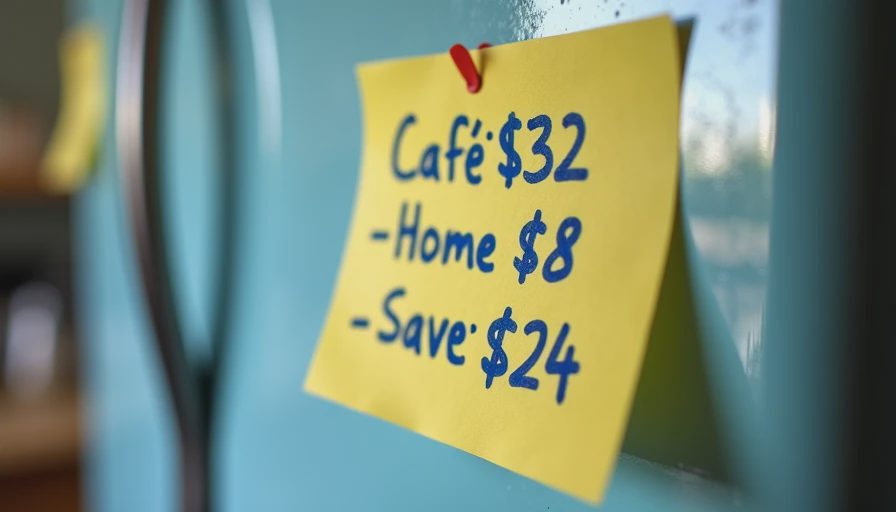
Write the weekly totals on a sticky note if you want a visible reminder. Mine lived on the fridge for a month until the new default felt normal. The note was not pretty. It was effective.
You have a week of receipts and a jar of concentrate. Run the numbers the same way. Good enough is the point here—and the point at which home coffee clearly wins is closer than most of us assume.