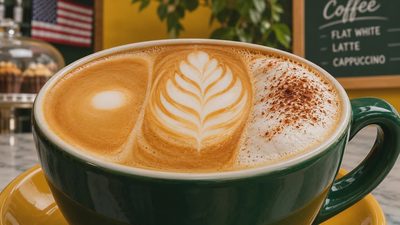
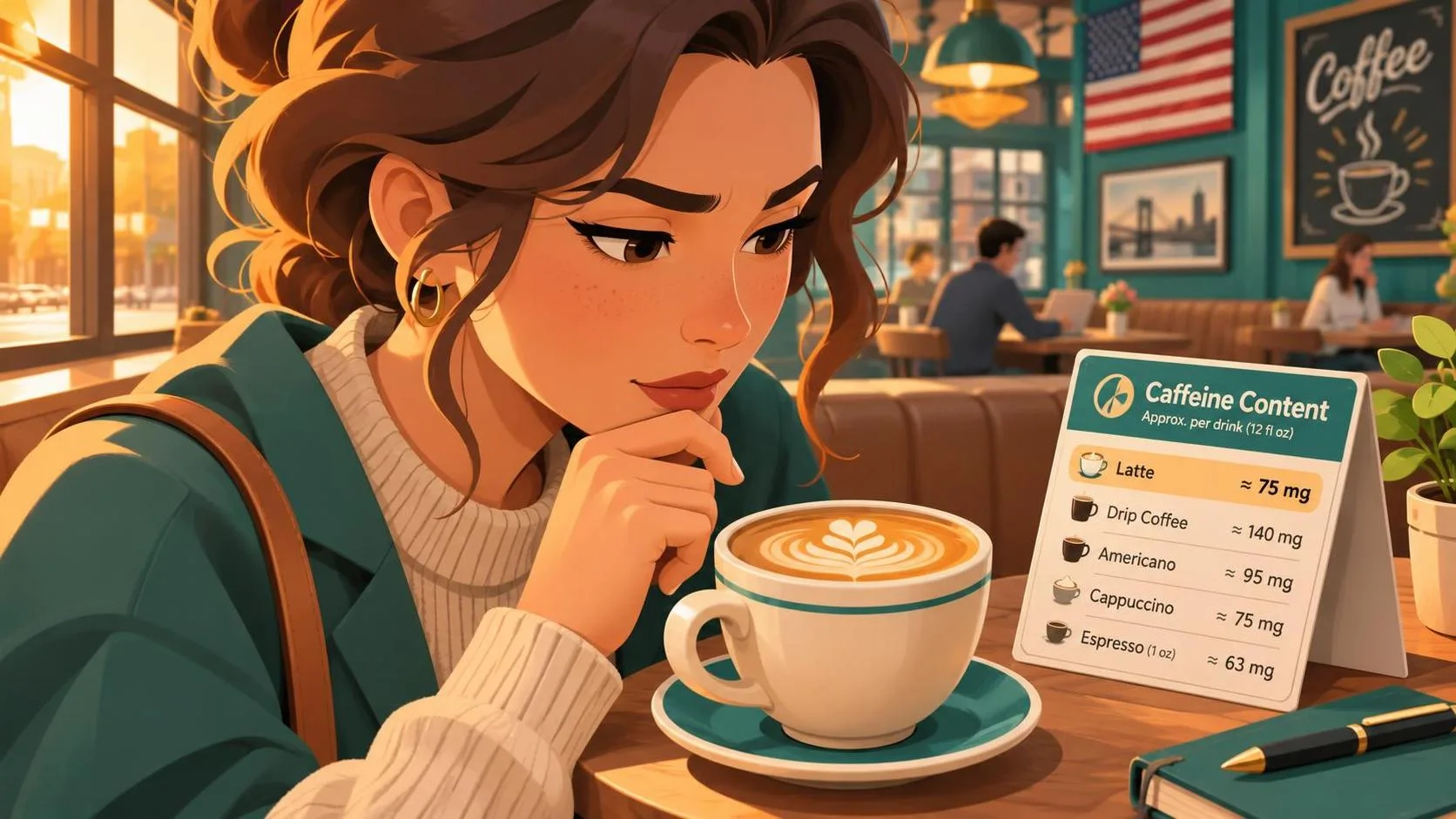
Wondering how much caffeine is in a latte? A useful starting estimate is about 60–65 milligrams per espresso shot, so a latte made with two shots has roughly 120–130 milligrams. The actual amount varies with the coffee and how it is brewed. Milk adds volume, not caffeine, so the quickest way to estimate your drink is to count the shots.
Start with the espresso, not the cup size
A latte is generally espresso topped with steamed milk and a little foam. A one-shot latte may have around 60–65 milligrams of caffeine; a two-shot latte may have around 120–130 milligrams. Treat those as estimates, not a guarantee for every coffee shop or home machine.
The number of shots matters more than whether your cup looks small or large. A shop might make a larger latte by adding another shot, more milk, or both. A double shot generally has more caffeine than a single, but it is not necessarily exactly twice as much: recipes, bean blends, and shot sizes vary.
If you are ordering at a cafe, ask how many shots come in your size and whether the shop has a caffeine figure for its espresso. If you want less without giving up your usual cup size, ask for one shot instead of two. You will get a milkier drink, not a smaller one.
How much caffeine is in a latte compared with regular coffee?
A typical 8-ounce cup of brewed coffee can have around 80–100 milligrams of caffeine, though brewing methods and serving sizes make a difference. That puts a one-shot latte below that example and a two-shot latte above it. Neither comparison tells you exactly what is in the cup in front of you.
The easy thing to miss is serving size. A 12- or 16-ounce mug of brewed coffee can contain substantially more caffeine than an 8-ounce cup of the same brew. Meanwhile, a 16-ounce latte with two shots does not automatically have more caffeine than a smaller latte with the same two shots.

If you are switching from drip coffee to lattes to reduce caffeine, compare the actual drinks you order. A large brewed coffee and a one-shot latte are different from a small brewed coffee and a latte with an extra shot. The menu name alone will not settle it.
Hot, iced, flavored, and decaf lattes
An iced latte made with the same espresso as a hot latte starts with the same approximate caffeine. Ice changes the temperature and takes up space in the cup; it does not remove caffeine. Shops may use different shot counts for their hot and iced sizes, so check the recipe rather than assuming they match.
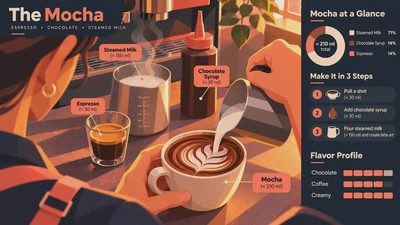
Most milk choices, including dairy milk and plain plant-based milks, do not add meaningful caffeine. Vanilla and caramel syrups generally do not either. Chocolate is a different story: a mocha can have a little additional caffeine from its chocolate, with the amount depending on the ingredient and serving.
A decaf latte is not necessarily caffeine-free. Decaffeinated espresso still contains some caffeine, and the amount varies. If even a small amount matters to you, ask the shop for its decaf information or choose a drink made without coffee or another caffeinated ingredient.
A half-caf latte mixes regular and decaf espresso. For a rough estimate, count the regular portion using the 60–65 milligrams-per-shot starting point, then remember that the decaf portion adds a little more. The result depends on how the shop divides and prepares the shots.
Estimating a homemade latte
For espresso made at home, count your shots and use the same rough estimate: one shot is about 60–65 milligrams, and two are about 120–130 milligrams. Beans, the amount of coffee used, and extraction all affect the final number. If you use a pod or capsule, check the package or manufacturer’s information for that specific coffee; the word “espresso” on its own is not a reliable caffeine measurement.
No espresso machine? Strong brewed coffee or concentrated cold brew mixed with warm or cold milk makes a perfectly practical latte-style drink. It will not have the same espresso flavor, and its caffeine depends on the coffee and the amount you pour. Start with the caffeine information for your coffee, if available, and calculate the fraction you use.
For example, if a labeled coffee has 100 milligrams per 8 ounces, using 4 ounces contributes about 50 milligrams. Add milk and syrup as you like; those amounts do not change the coffee’s contribution. If the coffee has no caffeine information, strength and dark color alone cannot give you a dependable number.

A quick home version takes about five minutes if your coffee is already brewed: pour it into a mug, add warm milk, and stir. A jar or handheld frother is optional, and cleanup can be as simple as a mug and spoon. Ingredient cost varies with your coffee and milk, so use your package prices rather than assuming a fixed cost per cup.
Adjusting your order without overthinking it
If you want a gentler morning drink, order fewer regular shots, try half-caf, or use decaf. If you want the coffee flavor to stand up to more milk, a smaller cup with the same number of shots can taste stronger without adding caffeine. An extra shot changes both flavor and caffeine, so it is worth asking before adding one out of habit.
For daily totals, remember to include other sources such as tea, energy drinks, chocolate, and some medications. Caffeine sensitivity varies, and pregnancy, medical conditions, or medications can change the advice that applies to you. A healthcare professional can help with a personal limit.
The shortcut is simple: find the shot count, estimate about 60–65 milligrams for each regular shot, and check the shop or package when you need a closer number. Then order the milk and temperature you actually enjoy.