
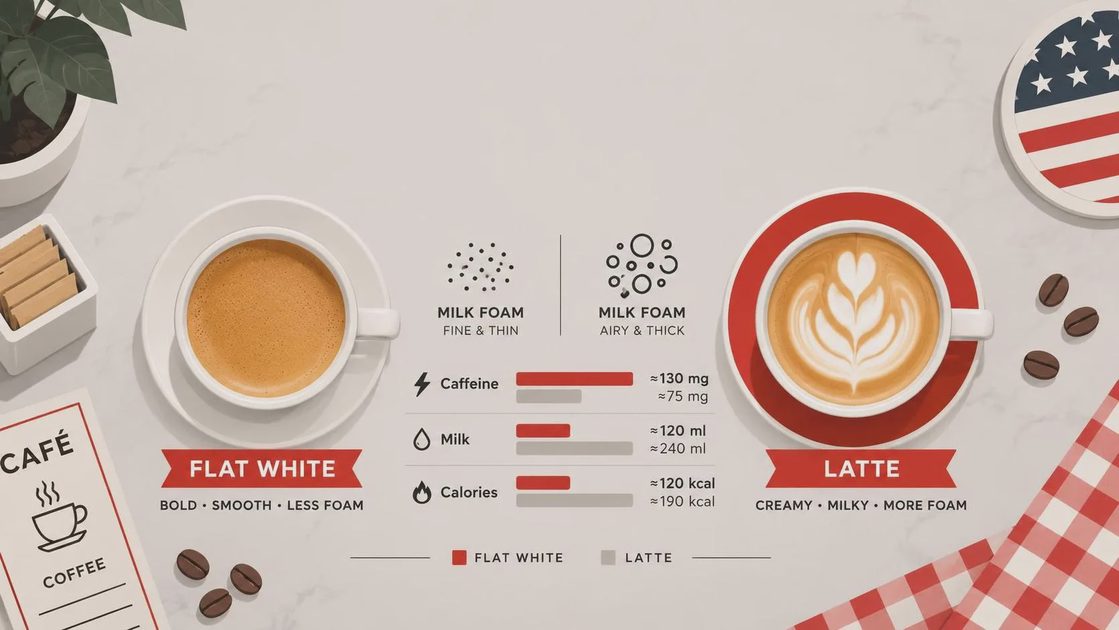
The difference between flat white and latte comes down mostly to milk: a flat white is usually smaller, with less milk and a thin layer of fine foam, while a latte is typically larger and milkier. Both combine espresso and milk. Order a flat white if you want the coffee flavor to stand out; choose a latte if you want a softer, creamier drink.
Neither drink requires a fancy home setup to approximate. A latte is more forgiving with a handheld frother, while a flat white asks for smoother, finer foam. You can make either in about 5 to 10 minutes, with a mug, a way to heat milk, and a way to make strong coffee.
Milk, foam, and flavor: what changes in the cup
A flat white generally has a higher proportion of coffee to milk. Its milk is steamed into microfoam: tiny bubbles blended throughout the milk rather than a tall, airy cap. The result should feel smooth and velvety, with a noticeable espresso flavor.
A latte also uses steamed milk, but usually more of it. It often has a thin layer of foam on top, though the exact texture varies. The extra milk softens the espresso, making a latte a comfortable choice if you enjoy a gentler coffee flavor or want room for flavored syrup.
There is no universal cup size or fixed shot count for either drink. A café may serve a flat white in a smaller cup, but recipes and sizes differ. Starbucks and Peet's Coffee both offer these drinks, for example; check the size and espresso details on the menu at your location rather than assuming they use identical recipes. If you like a smaller, coffee-forward order, start with the flat white. If you want a larger, milk-forward drink, start with the latte.

A useful ordering question is, “How many shots are in each, and how much milk?” If both drinks have the same number of shots, the one with less milk will generally taste stronger. If the shot counts differ, size alone will not tell you much. You can also ask for fewer pumps of syrup if you want sweetness without losing the coffee flavor.
The difference between flat white and latte at home
For a small flat-white-style drink, start with a double shot of espresso and about 4 ounces of warm milk. For a latte-style drink, use a double shot and about 6 to 8 ounces of warm milk. These are starting points, not rules: add a splash more milk if the coffee tastes too sharp, or use less next time if it disappears.
To make either drink, brew the coffee first and pour it into a mug. Heat the milk until warm and steamy, not boiling. Froth it briefly, then pour it over the coffee. For the flat white, aim for a little fine foam mixed into the milk. For the latte, add more milk and spoon a little foam on top if you like it.
A handheld frother or a small French press can add texture without an espresso machine. With a frother, keep the whisk just under the surface briefly, then lower it to mix the milk. With a French press, pump the plunger gently through warm milk, leaving plenty of space for expansion. Neither method perfectly reproduces steam-wand microfoam, but both make a pleasant drink. Wash the plunger or whisk promptly so milk does not dry on it.
If the foam gets fluffy and stiff, you have not ruined breakfast. Tap the container gently on the counter and swirl; if big bubbles remain, hold some foam back with a spoon as you pour. Next time, froth for less time. A latte can accommodate more foam; the flat white is the better place to aim for a thinner, smoother layer.
No espresso machine? Use strong coffee
Espresso gives both drinks their usual concentrated base, but strong brewed coffee makes a workable shortcut. A moka pot or AeroPress can produce a concentrated coffee base; neither makes the same espresso as a typical espresso machine. Use a small amount of strong coffee and add milk gradually, tasting as you go. Regular drip coffee works too, though the finished drink will taste less concentrated and may need less milk.
Cold brew concentrate is another option, especially over ice. Start with a small pour of concentrate and add milk to taste. Follow the concentrate's dilution directions as a starting point, since homemade and store-bought strengths vary. The result is a milk-and-coffee drink inspired by these café orders, not a traditional espresso flat white or latte.
For milk alternatives, choose the one you already enjoy in coffee. Oat and soy drinks can make satisfying foam, but performance varies by brand and formula. A barista-style version may froth more easily; it is not a necessary purchase if you are happy with warm milk and a little less foam.
Cost, cleanup, and the easiest choice
Your per-cup cost depends on your coffee, milk, and serving size. To calculate it, divide the price of each ingredient by the number of servings you get from it, then add the amounts used. For example, if your coffee portion costs 50 cents and 4 ounces of milk costs 20 cents, that small drink costs 70 cents in ingredients. Those are sample numbers, not a promise about your grocery bill. Syrup, dairy alternatives, and larger pours change the total.
Cleanup is usually one mug, a milk container, and whatever you used to brew and froth. If that sounds like too much on a weekday, skip the foam: warm milk still gives you the creamy coffee-and-milk combination. The texture will be different, but the flavor balance is easy to adjust.
A latte-style drink is the simplest starting point for a household with different preferences. Make the same coffee base, then pour less milk into one mug for a stronger cup and more into the other for a mellow one. Add syrup only to the mug that wants it. You get two useful drinks without making two separate recipes.