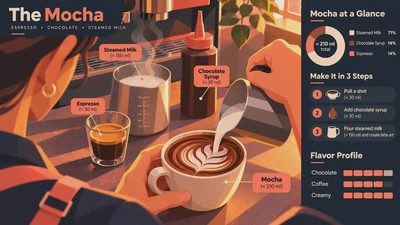

A mocha latte sounds like a special coffee-shop order, but a good mocha latte takes about 10 minutes and does not require an espresso machine. I tried it with strong drip coffee, cocoa powder, and regular milk on a busy weekday morning. The result was creamy, chocolatey, and much cheaper than a café run. I priced it. Here is the shortcut.
What you need for one drink
Use 6 ounces of strong brewed coffee, 6 ounces of milk, 1 tablespoon unsweetened cocoa powder, 1 to 2 teaspoons maple syrup or sugar, and a small pinch of salt. The salt is optional, but it keeps the chocolate from tasting flat. Add 1/4 teaspoon vanilla extract if you want a softer, dessert-like finish.
For the coffee, use a dark or medium-dark roast brewed slightly stronger than usual. I make mine with about 1 1/2 tablespoons of ground coffee per 6 ounces of water. Espresso works too, but it is not essential. A moka pot, AeroPress, or concentrated pour-over can all produce enough strength for this drink.
The cocoa matters more than an expensive bean. Hershey's unsweetened cocoa is easy to find and works well. Trader Joe's cocoa, Ghirardelli, or a grocery-store house brand will also do the job. Dutch-process cocoa gives a smoother, darker flavor, while natural cocoa tastes a little sharper.
The five-minute method
- Brew the coffee first so it is hot when the chocolate mixture is ready.
- Add cocoa powder, sweetener, salt, and 2 tablespoons of hot coffee to a mug or small saucepan.
- Stir until the cocoa becomes a smooth paste. This prevents dry cocoa clumps from floating across the top of your drink.
- Warm the milk in the microwave for 45 to 75 seconds, or heat it gently on the stove. Do not boil it.
- Pour the warm milk into the mug, add the remaining coffee, and stir.
- Froth the surface with a handheld frother, French press, or tightly sealed jar. If you use a jar, leave plenty of room and be careful with hot liquid.
The paste step is the small detail that improved my first attempt. I once dumped cocoa directly into hot coffee and stirred for a full minute. It still tasted fine, but tiny dry flecks remained on the surface. Mixing the cocoa with a splash of coffee first takes about 20 extra seconds and gives a smoother mocha latte.

Cost, cleanup, and equipment
My homemade version costs roughly 60 to 95 cents, depending on the coffee, milk, and sweetener. A coffee-shop version can easily cost $5 or more before tax and tip. That difference adds up quickly if you buy two or three drinks each week. The home version also lets you control the chocolate instead of accepting whatever syrup amount comes in a standard pump.
Cleanup is limited to a mug, spoon, and frother. If you heat the milk in a small saucepan, add that pan to the list. For the lowest-effort routine, microwave the milk in the same mug after mixing the cocoa with coffee. You will not get café-level foam, but you will save a dish.
You do not need a $500 espresso setup for this recipe. A $10 to $20 handheld frother improves the texture, but it is not required. This is better with foam, but it is not $100 better. If you already own a drip brewer, spend your money on decent cocoa or milk first.
Milk choices and sweetness adjustments
Whole milk makes the richest mocha latte and creates the easiest foam. Two percent milk is my practical everyday choice because it tastes creamy without feeling heavy. Oat milk gives the drink a naturally sweet flavor and usually works well with chocolate. Barista-style oat milk foams more reliably, but ordinary refrigerated oat milk is perfectly usable.
Unsweetened almond milk produces a lighter drink with less body. Soy milk is a stronger option if you want a fuller texture without using dairy. Coconut milk adds a noticeable flavor, so I would use it only when you specifically want a coconut-chocolate combination.
Start with 1 teaspoon of sweetener. Many café mochas are sweeter than people expect because the chocolate sauce contains plenty of sugar. Maple syrup dissolves quickly and tastes rounded, while brown sugar adds a deeper caramel note. If you use sweetened chocolate syrup, skip the extra sugar until you taste the drink.
Hot, iced, and two-order variations
For an iced mocha latte, make the chocolate paste with 3 tablespoons of hot coffee, then add 3 or 4 ice cubes and 5 ounces of cold milk. Pour in another 3 ounces of strong coffee and stir well. Do not pour a full cup of hot coffee over a small glass of ice; it melts quickly and leaves you with a watery drink.
Jamie prefers an iced, sweeter drink, while I usually want something hot and less sweet. We use the same chocolate base and change only the temperature and sweetener. That is the useful part of a mocha latte in a shared kitchen: one recipe can create two different orders without buying separate ingredients.
For a stronger version, replace 2 ounces of the brewed coffee with espresso or moka-pot coffee. For a lighter afternoon drink, use half-caf coffee or decaf. A little whipped cream is fun on weekends, but it is not necessary for the basic recipe.

What went wrong in my first test
My first version used cold milk, weak coffee, and too much cocoa. It tasted like thin chocolate milk with a coffee smell. The fix was not fancy equipment. I brewed the coffee stronger, warmed the milk, and reduced the cocoa to 1 tablespoon. The drink immediately tasted more balanced.
Another failed attempt used boiling milk. The surface became oddly foamy, but the flavor was dull and the milk smelled cooked. Gentle heat is enough. If the mug is hot to the touch and the milk is steaming, stop heating it.
I also tried chocolate chips. They melted unevenly and left a few waxy bits at the bottom. Chocolate syrup is faster, but cocoa powder gives you better control and costs less per serving. If you use chips, choose finely chopped semisweet chocolate and stir it into hot coffee before adding milk.
My weekday recommendation
Make the coffee strong, mix the cocoa into a paste, warm the milk without boiling it, and sweeten lightly. That sequence creates a smooth mocha latte with ordinary ingredients in about five to ten minutes. The total cost stays under a dollar for most kitchens, and cleanup is manageable even before work.
If you want a dependable morning drink, make a small jar of the dry mix: 4 tablespoons cocoa powder, 2 tablespoons sugar, and a pinch of salt. Use 1 1/2 teaspoons of the mix per drink, then adjust after tasting. Store it sealed in the pantry for several weeks.
Good enough is the point here, and this is more than good enough. You get café-style chocolate flavor without a commute, a complicated machine, or a sink full of tools. Try the hot version first, then use the same base for an iced mocha latte when the weather warms up.